I finished reading Katabasis by R F Kuang last weekend and have since remained enthralled by the expanse of the book. The story not just holds good with its fantastic core premise, it also peppers its 541-pages long body with a plethora of references. Mathematics, Logic, Science, Mythology, Poetry and more – you shall frequently bump into them because, well, it is a journey to Hell and back, and our two sojourners are PhD students from Cambridge!

I didn’t mind referencing the meanings of some of the effects and paradoxes though. It is refreshing for me when a book can throw me new things and open doors for learning.
For my reference (and if you are interest, yours too), I am underlining some of the key concepts deployed in Katabasis that I found fascinating. Clicking on the link shall open up the article for further reading. This is NOT an exhaustive list from the book; this is simply MY list!
Feel free to glance over this make-shift ‘thesaurus’ 🙂 before you start reading, or while on the go. Either way, I hope you have a swell of a ride!
- Ramanujan’s Summation : Intuitively, the sum of all positive integers (1+2+3…) diverges to infinity. However, Ramanujan discovered a way to assign a finite value to this divergent series using techniques from complex analysis and analytic continuation, and brought the sum to a finite −1/12.
- Setiya’s Modification : Setiya maintained that Consequentialists aren’t committed to killing one to prevent more killings.
- Casimir Effect : This arises from the quantum theory of electromagnetic radiation in which the energy present in empty space might produce a tiny force between two objects.
- Sorites Paradox : The sorites paradox, sometimes known as the paradox of the heap, is a paradox that results from vague predicates. A typical formulation involves a heap of sand, from which grains are removed individually.
- Poincare disk model : In geometry, the Poincaré disk model, also called the conformal disk model, is a model of 2-dimensional hyperbolic geometry in which all points are inside the unit disk, and straight lines are either circular arcs contained within the disk that are orthogonal to the unit circle or diameters of the unit circle.
- Gabriel’s Horn: A Gabriel’s horn (also called Torricelli’s trumpet) is a type of geometric figure that has infinite surface area but finite volume.
- Curry’s Paradox: Curry’s paradox is a paradox in which an arbitrary claim F is proved from the mere existence of a sentence C that says of itself “If C, then F”. The paradox requires only a few apparently-innocuous logical deduction rules. Since F is arbitrary, any logic having these rules allows one to prove everything.
- Banach-Tarski Paradox: Given a solid ball in 3-D space, there exists a decomposition of the ball into a finite number of disjoint subsets that can be put back together in a different way to yield two identical copies of the original ball.
- Liar Paradox: It is generated by a sentence or proposition (or any truth bearer more generally) that says that it is false. If we use the name ‘S’ for the sentence ‘S is false’, then that very sentence says of itself that it is false.
- Escher’s Trap and Penrose Stairs (my favorite): It is a two-dimensional depiction of a staircase in which the stairs make four 90-degree turns as they ascend or descend yet form a continuous loop, so that a person could climb them forever and never get any higher. Additional reading: M C Escher’s mind-bending world
- Russell’s Paradox: shows that every set theory that contains an unrestricted comprehension principle leads to contradictions.
- Gödel’s Incomplete Theorem (my other favorite): It proved that any set of axioms you could posit as a possible foundation for math will inevitably be incomplete; there will always be true facts about numbers that cannot be proved by those axioms.
- Science Sexualis or Scientia Sexualis: An ambitious group survey of contemporary artists whose works take up the fraught relationship between sex, gender, and science.
- Zeno’s Paradoxes: A set of four paradoxes, presented by the ancient Greek philosopher Zeno of Elea, dealing with counterintuitive aspects of continuous space and time.
- White Horse Paradox: The White Horse Dialogue in Chinese philosophy is a debate between two unnamed speakers on a proposition often translated as a white horse is not a horse.
—-
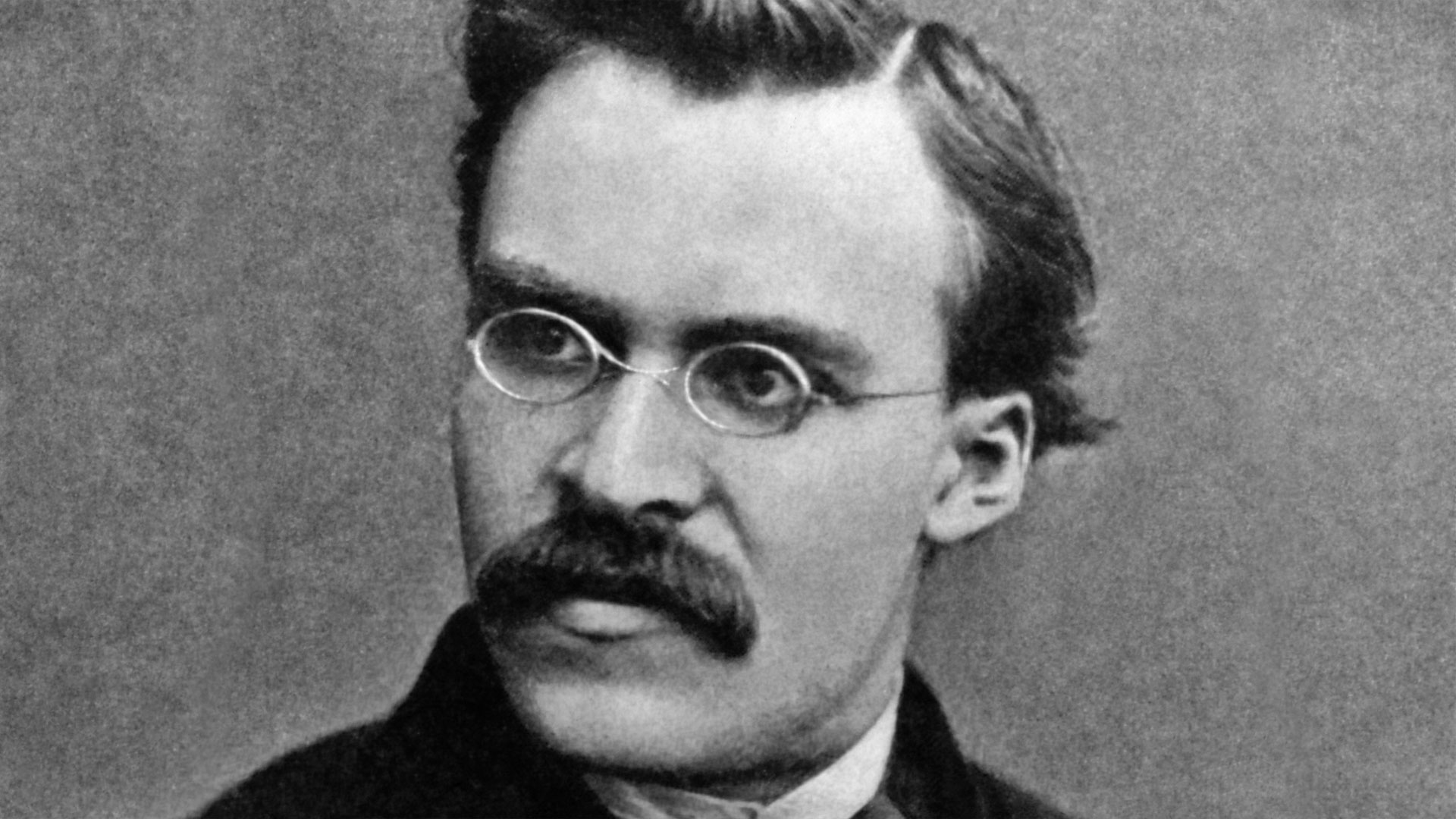
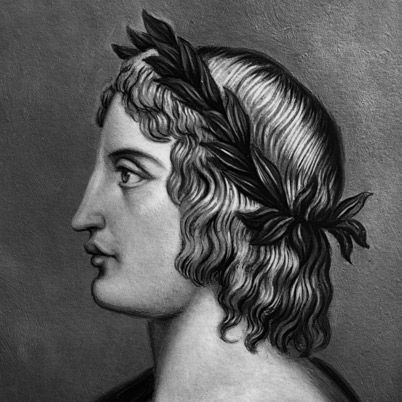
The book draws heavily from Greek Mythology. Besides, authors whose texts and philosophies have been quoted with abandon are Dante Alighieri, Friedrich Nietzsche and Virgil.

Well, with references and annotations or without, Katabasis is likely to deliver and send one onto many rabbit holes. I, for one, wouldn’t mind a few 🙂
 SEEMITA DAS
One thought on “References in ‘Katabasis’, R F Kuang’s latest novel”