Simmering. Never stopping. Always simmering. Simmering at the contours of our cognition. Simmering at the edges of our dreams. Simmering at the rims of our comprehension. At the corners of our being but never vanishing. That’s how our past lives.
And how do we make eye contact with it? With pride? With temerity? With shame? With a palm gently massaging our heart lest the past pounces on it and leaves its color drained?
In Javier Marias’ world, it simply keeps walking by your side. One cannot shake it, one cannot sever ties with it. And most importantly, it contorts the image of present with its experience.
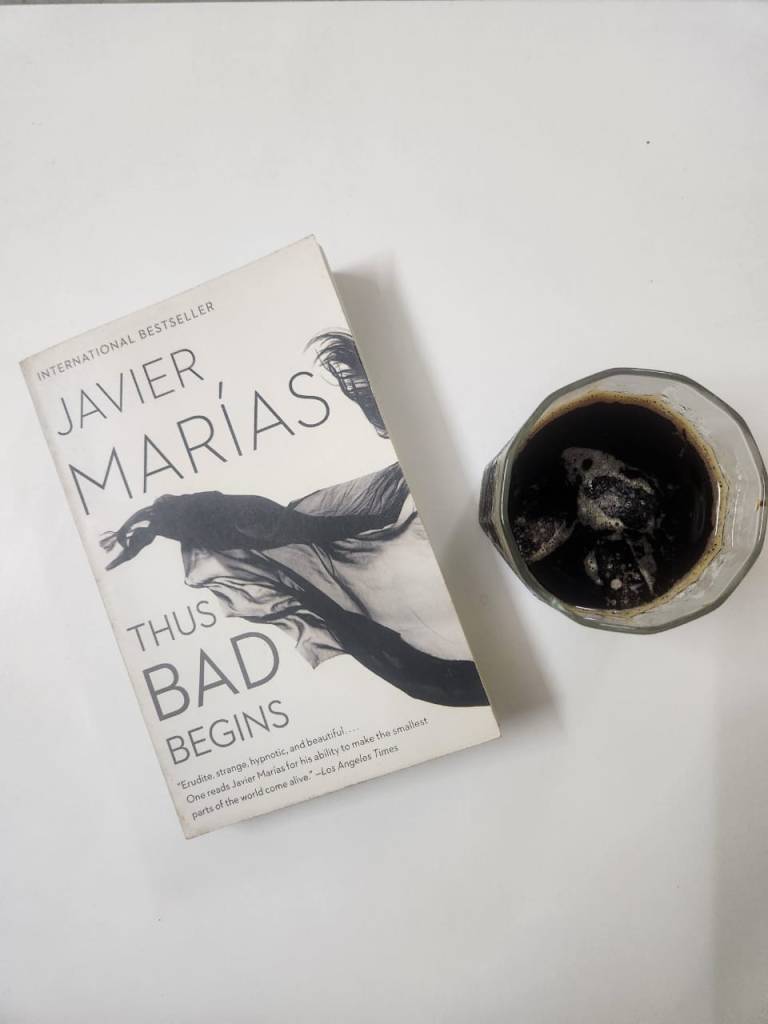
Circa 1980. Madrid. Still feeling the exhilaration of release from the clutch of dictator Franco. A freedom so alien, it fans the deepest loins of experiments. And under this reckless sky, a 20-something Juan de Vere comes to intern with a fallen auteur, Eduardo Muriel. As youth finds allure under the eccentricity of the experienced, the equation softens and Eduardo invites Juan to reside in his home, purely for work reasons. But once in, Juan finds it impossible to tear away from Beatriz, Eduardo’s beautiful wife who is always, without exception, at the receiving end of Eduardo’s wrath and humiliation. And if dispensing of such disdain was not enough, Eduardo tasks Juan further to investigate a family doctor – a certain Dr. Vechten – on nefarious rumors he has been unable to ignore.
What follows is a ride so gentle and inaudible that one may dispatch them to boxes labelled ‘to file’. But at the beds of the gentle-most streams lie secrets that feel invincible from discoverability. In Marias’ world though, they appear – slowly, buoying on the waves of suspicion, and then, gradually, emerging onto the surface, for all to see.


But do such sights draw action?
Marias’ mastery of highlighting such dichotomy of human propriety and our propensity to twist past to suit our present dazzles in this book. I couldn’t help but fall for Jaun’s observations who narrates his past story from his present. Casting a wide net that catches struggling veins of suppression and abuse, misery and defiance, power and order, love and betrayal, Marias’ paints a picture that simmers at its sides with a life that felt like mine (and may be yours). Because how many of us have not been dragging the pasts in our suitcases, and have not felt vain about it?
“….cleanliness is more persistent than dirt, and almost any thing can be washed away.”
If only. Well, if only.
 SEEMITA DAS